The $150,000 Document Nobody Reads Anymore
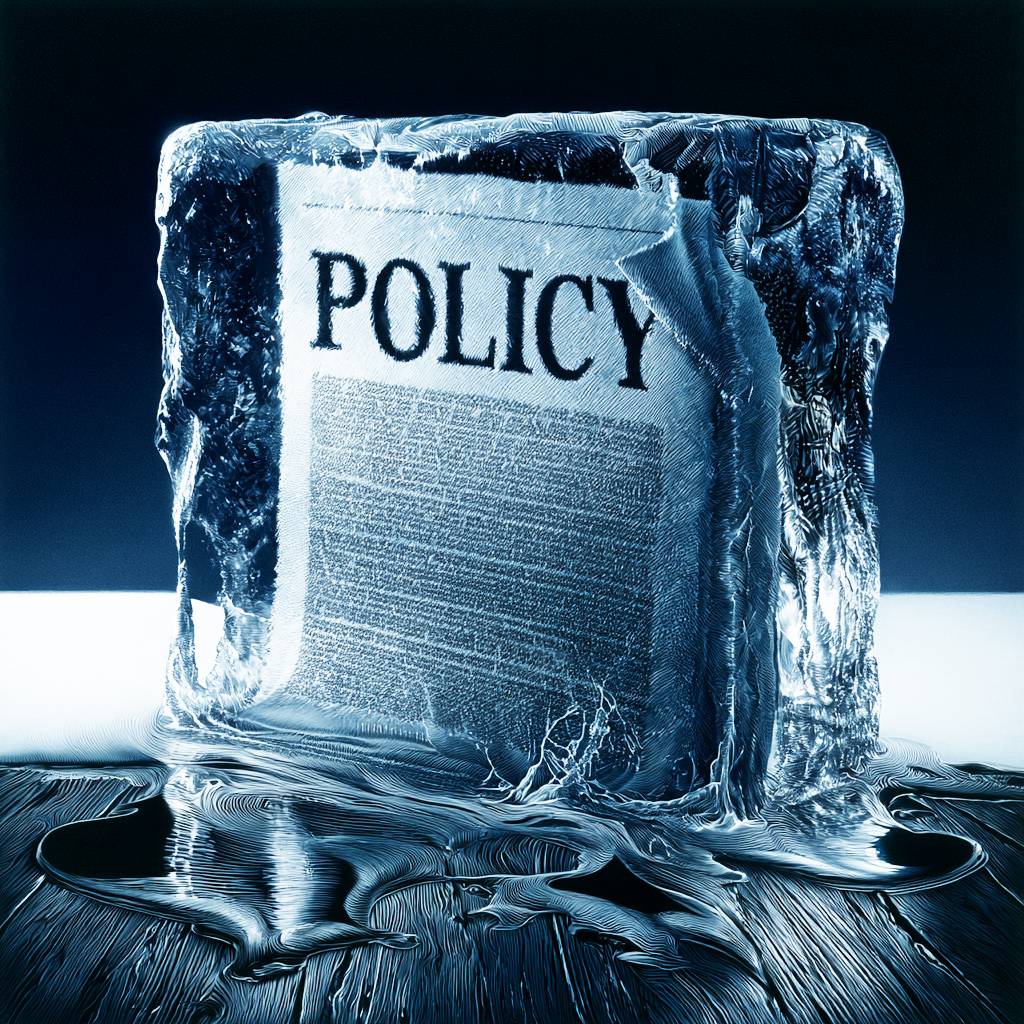
Somewhere right now, a steering committee is hunched over a table reviewing paragraph six of an expensive global AI policy. By the time they approve it, paragraph six will already be wrong. Annoyingly wrong. And the culprit is caution. Too much of it for today’s business pace.
It’s the same hesitance showing up everywhere from security updates to change comms to internal memos. Restraint is a natural instinct—especially for good people trying to protect the company. But it’s the wrong instinct for this moment. In some cases, it might even be a liability.
AI policies should be written in pencil. They need to be more dynamic and more in-step with the people feeling the tech spread through the organization faster than the most outlandish rumor. If they aren’t, people are crafting policies for a world that moved on three drafts ago. And yet, the committee is still waiting for their next meeting.
Even though steering committees are often full of brilliant people doing their jobs, the belief that a policy must be comprehensive, approved, and permanent before anyone sees it is broken.
That worked when the ground held still for two years. It doesn’t work when the ground randomly lurches on a Sunday.
So, what do you do?
You quit writing for permanence and write specific sections for the week (or every other week)—like a weather report.
That means a solid but flexible structure with modular guidance instead of monolithic documents. Small, frequent updates instead of annual revisions (because some conditions change constantly, unlike others that can remain stable for months—or forever).

We need to communicate more effectively for the business world we’re in now – the one that requires agility no matter what’s moving fast (because there will always be something new). It means telling your team: “Here’s what we know today. Here’s what we’re watching. Here is what changes if it does.”
This approach cuts the approval chain cost. Consider: Every pause between draft and publish is a window of exposure. The legal review might take a week. The privacy team could take another. The steering committee meets biweekly. By the time everyone signs off, the AI tool has already updated twice, three new use cases have emerged, and someone on the team has already started using a shadow tool because they needed an answer yesterday, not next quarter.
I am not advocating skipping legal review, but I am suggesting the possibility for parallel workflows instead of serial ones. Accountability and timestamped records are table stakes for any workflow, of course.
At its root, this is partly a communications issue. There are too many things that can happen in the gap between “draft complete” and “policy live.” And nimble comms can help with that.
Some might argue my suggestion to go from long annual updates to modular updates lowers standards, but I disagree. Matching the pace of the thing you’re trying to govern means evolving to thrive, not sacrificing quality. We’re still in the wild west of AI and all that will come with it, and it’s not waiting for any steering committee. Neither should you.
If this resonated, that’s enough. The idea is yours to take wherever it fits.