The Crutch Becomes the Wound: On Trading Your Voice for Speed

We’re all hobbling. Hobbling loud. Hobbling wrong. And it’s visible. We’re hurting bad because we trusted AI too much too fast, and now our comms sound like hell.
“It’ll make us more efficient,” they told us. “More consistent.” And I believed it at first. But then I realized I was partially wrong. AI-assisted efficiency can give us volume, yes, that is true, but if you don’t understand that communication is more than information transfer—you’re destined to lose your audience’s trust.
A lack of trust affects project timelines. It affects teamwork. It affects revenue and your credibility. It’s expensive.
A few years ago, I didn’t realize my own bias when I agreed that AI-driven efficiency was a boon. I was partial because well…I already know what makes good writing and communications, so I can instinctively push back. I know when AI gives me something musty and tells me it’s clean. I understand the power of the sound on the page and the weakness of its absence. I have been studying the craft non-stop for 26 years, so I know how to wrangle AI and when not to use it at all.
But not everyone does. Even if they are brilliant in their field.
I’m now watching just how many leaders let AI chew up their unique voices just to regurgitate the average of all text on the internet, good and bad. “Average” is the most expensive word in leadership right now. You can’t afford it.
Communication is so much more than just data. It’s in the rhythm of how you speak, the words you choose when you’re being honest versus careful. It’s recognizable. It’s you. AI erases that signature and jeopardizes your ability to resonate with your teams.
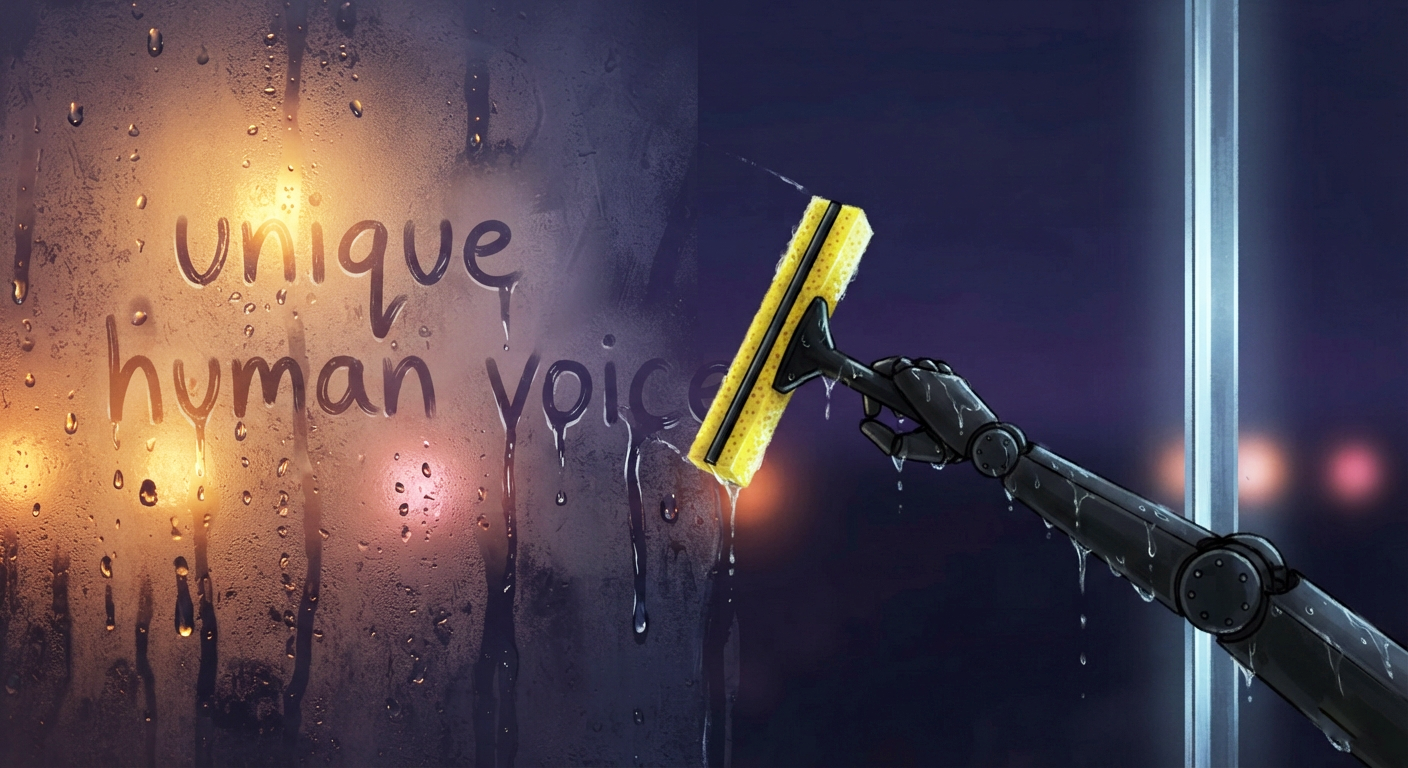
How many times this week have you tuned out a message the instant you realized AI wrote it? Do you realize making your teams write everything with AI strips their voices, scrapping your ability to discern something about their actual state of mind?
The rush to optimize has left us drowning in sameness and that sameness is dangerous.
AI is a helpful tool, but it is most helpful when the human guiding it is already excellent at what they do. Only then can you tell that it’s missing subtext and emotional intelligence—when it’s writing a memo or speech like a one-speed sprint vs a varying speed marathon.
So, if you find your shoulders dropping when you realize you’re reading someone’s lazy AI piece, remember that if you do so yourself thinking others won’t notice, they will. And they’re having the same reaction. Don’t let AI hollow out one of the best things about you that build trust and culture: your unique voice.
If you understand communication is more than information transfer but need help tailoring your voice to reach and resonate across diverse audiences, message me. I’ll help you lose the crutch, not the support.